Nourishing the Golden Years: A Heart-Led Guide to Meal Preparation for Elderly Loved Ones

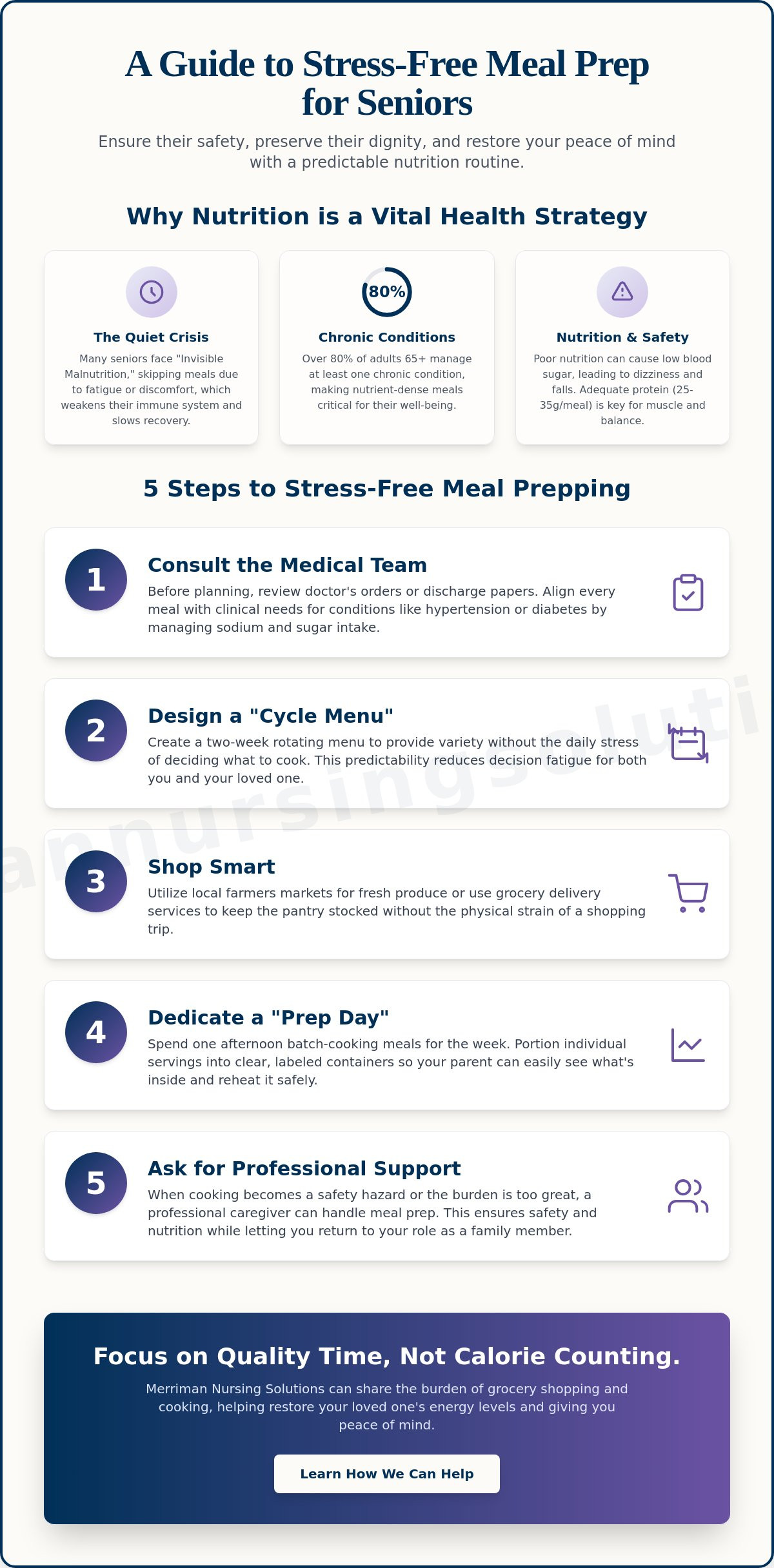
You walk into your mother's kitchen and notice the stove is cold, the fridge holds only a half-empty carton of milk, and she admits she just "wasn't hungry" for dinner again. It's a heart-wrenching moment that many families face, often sparking a cycle of guilt and anxiety about kitchen safety. Proper meal preparation for elderly loved ones is about so much more than just filling a plate; it's about preserving their dignity while ensuring their bodies stay resilient. Since over 80% of adults aged 65 and older manage at least one chronic condition, the quality of every bite truly matters.
We know you want to return to your role as a devoted family member rather than a stressed coordinator of calories. This guide provides a comprehensive, heart-led framework to help you establish a predictable nutrition routine that replaces confusion with confidence. You'll learn how to simplify the cooking process and navigate conflicting dietary advice while keeping your loved one's kitchen safe. We're here to help you restore your senior's energy levels and find the peace of mind you deserve.
Table of Contents
Why Nutritious Meal Preparation is Vital for Seniors
When we think about meal preparation for elderly family members, it's easy to view it as just another box to check on a long caregiving to-do list. At Merriman Nursing Solutions, we believe this process is a vital, heart-led health strategy rather than a chore. It isn't just about counting calories. It's about providing the essential fuel that allows your loved one to remain independent and vibrant in their own home. Many seniors face a quiet crisis often referred to as "Invisible Malnutrition." They might skip meals because the physical effort of cooking feels overwhelming, or they might rely on simple tea and toast because it's familiar and easy. This often leads to undernutrition in older adults, a condition that can weaken the immune system and significantly slow down recovery after a hospital stay.
Food also carries a heavy emotional weight that shouldn't be overlooked. For those living with memory loss, the scent of a familiar family recipe can provide a profound sense of comfort and grounding. It connects them to their history and their identity. Proper meal preparation for elderly adults is a proactive way to ensure that these emotional and physical needs are met with dignity and respect.
The Connection Between Nutrition and Safety
In our local communities, from the quiet streets of Winchester to the family homes in Stoneham, we see how nutrition directly impacts daily safety. When a senior hasn't eaten enough, their blood sugar can drop unexpectedly. This hypoglycemia often leads to sudden dizziness or "brain fog," which are primary triggers for falls in Greater Boston homes. Protein is equally essential; seniors generally need about 25 to 35 grams of protein per meal to maintain the muscle mass required for steady walking and balance. Nutrient density is the practice of selecting foods that provide a high concentration of vitamins and minerals in every bite, making it the most critical factor for those with smaller appetites.
Dignity at the Dinner Table
Preserving a sense of self is just as important as the ingredients on the menu. We always encourage families to involve their loved ones in choosing recipes or picking out fresh produce, as this simple act respects their autonomy. Nutrition thrives on companionship, and having someone to share a meal with often turns a routine task into the highlight of their day. Sometimes, the transition happens when the stove itself becomes a safety hazard due to forgetfulness. Instead of taking away their kitchen entirely, we step in to handle the heat and the heavy lifting while they continue to enjoy the flavors they love. This approach ensures they stay safe without feeling like they've lost their independence at the dinner table.
5 Steps to Stress-Free Meal Prepping for Older Adults
Creating a sustainable routine doesn't have to feel like a second job. It starts with a plan that prioritizes your loved one's specific needs while keeping your own stress levels manageable. Effective meal preparation for elderly family members follows a logical path from medical necessity to practical kitchen safety. By breaking the process down into five manageable steps, you can transform the kitchen into a source of vitality rather than a source of worry.
Step 1: Consult the medical team. Before you even write a grocery list, review the discharge papers or speak with their doctor. Managing conditions like hypertension or diabetes requires a specific balance of sodium and sugar that guides every ingredient choice. This ensures your heart-led care aligns perfectly with their clinical needs.
Step 2: Design a "Cycle Menu." You don't need to reinvent the wheel every Monday. A two-week rotating menu ensures variety without the mental burden of constant decision-making. For more inspiration on building these routines, the National Institute on Aging offers helpful Healthy Meal Planning: Tips for Older Adults.
Step 3: Shop smart in our local communities. We're lucky to have access to wonderful farmers markets across the Greater Boston area. If traveling to Lexington for groceries feels like too much, many local services now offer door-to-door delivery to keep the pantry stocked with fresh produce without the physical strain of a long outing.
Step 4: Dedicate a "Prep Day." Spend one afternoon batch cooking. Using this time for meal preparation for elderly parents allows you to portion out individual servings into clear, BPA-free containers. This makes it easy for your parent to see what's inside without opening every lid.
Step 5: Perform a fridge safety check. Every few days, take a moment to clear out anything that's past its prime. Organizing the fridge so the newest items are at the back and the "must-eats" are at eye level prevents accidental consumption of expired food.
The "Prep Once, Eat Thrice" Method
Efficiency is your best friend when managing care. Cook base ingredients like shredded chicken or quinoa in large batches. These can be transformed into a hearty soup on Monday, a fresh salad on Wednesday, and a warm stir-fry on Friday. We recommend using silicone or easy-grip containers that accommodate arthritic hands. Every container should have a label that includes the date it was made and simple reheating instructions, such as "Microwave for 2 minutes."
Kitchen Safety and Accessibility
A kitchen should be a place of nourishment, not a hazard zone. Rearrange cabinets to place frequently used plates and spices in "no-reach" zones between the waist and shoulder. This simple change reduces the need for step stools and prevents dangerous falls. Using slow cookers or air fryers is another wonderful way to provide hot meals without the risk of an open-flame accident on the stove. If you find that managing these daily tasks is becoming overwhelming, considering professional personal care for seniors can provide the extra layer of safety your family needs. Our team is always here to help you find a balance that works for your unique situation at merrimannursingsolutions.org.
Adapting Menus for Health: From Soft Foods to Heart-Healthy Diets
Adapting a menu is an act of love that directly supports a senior's medical journey. For many families in Waltham and Brookline, heart health is a top priority. Diets like the DASH (Dietary Approaches to Stop Hypertension) and Mediterranean plans aren't just trends; they're proven ways to manage blood pressure and cholesterol. These plans focus on whole grains, lean proteins, and healthy fats. You can find excellent Nutrition Information for Older Adults through the USDA to help guide these choices. To help with joint pain and mobility, we often suggest incorporating anti-inflammatory ingredients like salmon, walnuts, and turmeric into daily meals.
As we age, our taste buds can lose some sensitivity. Instead of reaching for the salt shaker, which can worsen fluid retention, try using fresh herbs, lemon zest, or vinegars. These bright flavors can make a meal exciting again. Sometimes, the physical act of eating becomes the challenge. If your loved one struggles with dental issues or swallowing difficulties (dysphagia), modifying textures is essential. You don't have to settle for bland purees. Try slow-cooking meats until they fall apart, or mashing roasted root vegetables with a bit of olive oil for a "soft food" diet that still feels like a real meal.
Nutrition for Memory Care and Dementia
Caregiving for someone with dementia requires a unique approach to meal preparation for elderly adults. When utensils become confusing, finger foods are a wonderful way to maintain their dignity and independence. Think of bite-sized chicken pieces, steamed broccoli florets, or avocado slices. For seniors who tend to "wander" and burn high amounts of energy, we focus on high-calorie, nutrient-dense snacks like nut butters or full-fat yogurt. It's also helpful to create a calm, distraction-free environment. Turning off the television and clearing the table of clutter helps them focus on the nourishment in front of them.
Post-Hospital Recovery Nutrition
The days following a hospital stay are a critical window for healing. Your loved one's body needs extra resources, specifically increased protein and Vitamin C, to support wound healing and tissue repair. We often see appetite changes during this time, often caused by anesthesia or new medication regimens. Small, frequent meals are usually better tolerated than three large ones. If you're feeling overwhelmed by these requirements, our guide on post-hospital recovery care Boston offers deep insights into safe healing at home. Tailoring meal preparation for elderly patients during this phase ensures they have the strength to thrive during their recovery.
The 7-Day Senior Nutrition Template: Easy, Delicious Ideas
Creating a balanced menu doesn't have to be a source of daily stress. When you have a structured template, you can ensure your loved one receives a variety of macro-nutrients without the mental exhaustion of planning every single meal from scratch. Effective meal preparation for elderly family members focuses on high-fiber starts, protein-rich middles, and easy-to-digest endings. This rhythm supports their natural energy cycles and keeps their digestive systems running smoothly.
Start the day with breakfast options that prioritize fiber and hydration, such as overnight oats topped with fresh berries or a warm bowl of cream of wheat. For lunch, aim for light but protein-dense choices. A tuna salad mixed with avocado instead of heavy mayo or a bowl of hearty lentil soup provides the stamina they need for afternoon activities. Dinner should be heartier but gentle on the stomach. Baked salmon paired with steamed asparagus or a small portion of shepherd's pie with well-cooked vegetables are excellent choices. Don't forget the "bridges" between meals; nutrient-dense snacks like Greek yogurt or sliced pears with a dollop of almond butter help maintain steady blood sugar levels throughout the day.
The "Monday-Sunday" Meal Framework
Consistency is comforting, but variety is vital. We suggest a 3-day rotation that you can easily expand into a full week. For example, Monday's roast chicken can become Tuesday's chicken and wild rice soup, which then serves as a side for Wednesday's lunch. This creative use of leftovers minimizes waste and significantly reduces your active prep time. It's also important to weave in "comfort food" favorites. If your father has always loved a specific beef stew, include it in the rotation. These familiar flavors boost spirits and encourage those with smaller appetites to finish their portions. If you find yourself struggling to balance these nutritional needs with a busy schedule, our team can step in to provide professional meal preparation and feeding support tailored to your family's unique tastes.
Hydration: The Forgotten Nutrient
Water is just as critical as solid food, yet it's often the most overlooked part of senior care. Many older adults lose their sense of thirst, making them highly susceptible to dehydration. This condition is particularly tricky because its symptoms, such as sudden confusion or extreme fatigue, often mimic the signs of aging or memory loss. To prevent this, we recommend setting a formal "Hydration Schedule."
Offer a glass of water or herbal tea with every meal and snack.
Keep a pitcher of infused water, perhaps with cucumber or lemon slices, within easy reach.
Incorporate hydrating fruits like watermelon or oranges into their daily snacks.
By making hydration a visible and consistent part of the day, you provide a simple but powerful defense against the "brain fog" that can lead to accidents or hospital readmissions. A well-hydrated body is a more resilient body, especially during the delicate weeks of post-hospital recovery.
How Professional In-Home Care Simplifies Nutrition and Safety
Many families begin their caregiving journey with a "do-it-all" mindset. It's a choice born from deep love, but it can quickly lead to physical and emotional exhaustion. At Merriman Nursing Solutions, we believe that you shouldn't have to carry the entire burden of recovery alone. Professional meal preparation for elderly loved ones allows you to step back from the stress of the kitchen and return to your primary role as a devoted daughter or son. Our caregivers don't just cook; they handle the entire process with a heart-led touch, from grocery shopping for the freshest ingredients to providing gentle feeding support that respects your parent's dignity.
Because we are a nursing-led organization, our support offers an extra layer of clinical safety that a standard delivery service simply cannot provide. We actively monitor for subtle changes in weight or signs that a new medication might be interacting poorly with certain foods. This professional oversight provides families in Boston, Lexington, and Newton with the reassurance that their loved one's nutritional health is being managed by experts who truly care. We're here to share the care so that you can find your own peace of mind.
Tailored Support for Complex Needs
Every senior has a unique rhythm, and some require more intensive support than a weekly visit can provide. Our 24/7 live-in care ensures that three nutritious meals and healthy snacks are never missed, even on the most difficult days. For those living with advanced dementia or Parkinson’s, the physical act of eating can become a source of frustration. We provide specialized feeding support that is patient, calm, and tailored to their specific motor abilities. Safety supervision is also a cornerstone of what we do. We stay present in the kitchen to prevent stove fires or accidents, ensuring the home remains a safe sanctuary for healing.
Your Partner in Care in Greater Boston
We're proud to be a local presence in the communities we serve, including Wellesley, Cambridge, and Concord. The "Merriman Difference" is found in the delicate balance of professional reliability and deep empathy. We don't see our clients as patients on a chart; we see them as neighbors who deserve to thrive in the comfort of their own homes. If you are feeling overwhelmed by the daily demands of nutrition and safety, we invite you to reach out. We can help you create a personalized plan that restores joy to your loved one's dinner table. Schedule a consultation with our heart-led care team today to learn how we can support your family's journey.
Embracing a Future of Vitality and Connection
Providing the right nutrition for your parent is about so much more than following a recipe. It's an opportunity to protect their health, boost their energy, and show them they're cherished. By using a structured 7-day template and adapting flavors for their specific medical needs, you turn a daily necessity into a source of comfort. Remember that meal preparation for elderly family members doesn't have to be a solo journey that leads to burnout. You now have the tools to simplify the process and ensure every meal is safe and nourishing.
At Merriman Nursing Solutions, we bring a heart-led approach inspired by our own family care traditions. Our expert nursing oversight ensures that complex health needs are met with professional reliability. We are honored to serve Greater Boston families with dignity and empathy, helping you return to the role of a loving family member rather than a coordinator. Let us handle the cooking and care; schedule your free home assessment today. You're doing a wonderful job, and you don't have to do it alone.
Frequently Asked Questions
How can I encourage my elderly parent to eat when they have no appetite?
Focus on serving small, nutrient-dense meals every few hours rather than three large ones. You can use colorful plates to make the food more visually appealing and involve them in menu choices to spark interest. Sometimes, the simple social connection of eating together is enough to encourage a few extra bites of nourishment and comfort during a difficult day.
What are the best soft foods for seniors with dental issues?
Opt for naturally soft proteins like flaky fish, scrambled eggs, or slow-cooked meats that pull apart easily with a fork. You can also serve mashed sweet potatoes, Greek yogurt, or fruit smoothies. These options ensure they receive vital nutrients without the pain or frustration that comes with chewing tougher textures, keeping the dining experience a pleasant one for them.
Is it safe for my parent to use the stove if they have early-stage dementia?
Safety depends on the individual, but generally, an unattended stove poses a high risk for fires or burns as cognitive changes progress. You might consider using a slow cooker or a microwave with an automatic shut-off feature. Having a caregiver present for safety supervision ensures they can still enjoy hot meals without the danger of an accidental open flame.
How many calories does an average senior need daily?
Most sedentary seniors need between 1,600 and 2,000 calories per day, though this varies based on their specific gender and activity level. It's more important to focus on nutrient density rather than just the total calorie count. Ensuring every bite is packed with vitamins and minerals helps them maintain their strength and immune function as they continue to age at home.
What foods should be avoided if my loved one is on blood thinners?
Consistency is key when consuming foods high in Vitamin K, such as kale, spinach, and broccoli, as sudden changes can affect how medications like warfarin work. You should also be cautious with cranberry juice and certain herbal supplements. Always consult with their medical team to establish a stable diet that doesn't interfere with their heart health regimen or recovery process.
How can I make meal prepping less overwhelming as a busy family caregiver?
Utilize a "Prep Once, Eat Thrice" method by cooking large batches of base ingredients like quinoa or shredded chicken. Portioning these into clear, labeled containers for the week ahead saves hours of daily labor. Professional meal preparation for elderly family members can also provide the respite you need to focus on your own well-being while we handle the kitchen.
Does Medicare cover meal preparation services for the elderly?
Original Medicare generally does not cover ongoing meal delivery or in-home meal preparation for elderly individuals. However, some Medicare Advantage plans may offer a short-term meal benefit following a hospital discharge. It's best to check with the specific plan provider or look into state-specific Medicaid programs that might offer partial coverage for eligible seniors who need extra support at home.
How do Merriman caregivers handle specific dietary restrictions like low-sodium or gluten-free?
Our caregivers follow the specific instructions provided by your loved one's medical team to create tailored, heart-led menus. We use fresh herbs and citrus to keep low-sodium meals flavorful and carefully vet ingredients for gluten-free requirements. This personalized approach ensures every meal supports their recovery while respecting their unique health needs and personal preferences with professional reliability and warmth.


Comments